Wednesday, January 23, 2019

Steps in making EMAS

Effective Microorganisms (EM) can be activated so that you end up with approximately 20 times the original amount. This is definitely not necessary, but it is often done to save money. It also helps to awaken dormant microbes. Application rates are the same either way.

Ingredients (per 1L)

1 part EM (40ml) -research shows that up to 1.5 parts may be better; I now use 1.25 parts (50ml) 

1 part Organic Blackstrap Molasses (40ml) 
20 parts dechlorinated water*, not distilled or reverse osmosis (800ml) 
Clean, airtight bottle (1L), generally plastic with screw-on lid (not glass) – can use bigger jugs, too. (do not use a jug in which a bad batch has previously been fermented, unless it has been washed, scrubbed, bleached, and cleaned with EM, and then all of these steps repeated again) 
pH paper is very useful to determine if your batch is good

Optional and optimal (I currently sell the last 3 in 1L bottles): 

1/4 tsp ceramic powder to structure the water (more won't hurt) 
1/2 Tbsp rock dust for minerals 
1/2 tsp sea minerals for many good things 
1/2 tsp liquid kelp for many good things
1/2 tsp liquid fish for many good things
There are several other ingredients not listed here that I use in my own activations.

*Dechlorinated water is not necessary, but definitely beneficial, as chlorine kills microorganisms. Tap water can be dechlorinated by letting it sit out for 24 hours. If the tap water has chloramine (such as in Victoria), a small amount of humic acids will help to tie it up (1/2 tsp per litre).

Directions:

1. Heat some of the water to 115-125F 

2. Pour water into your bottle and dissolve molasses 
3. Mix in any of the optional ingredients and then mix in the EM 
4. Add the remaining water and stir and/or shake very well. 
5. There should be an airspace equivalent to about 10% of the bottle on top 
6. Tighten lid and keep warm (95-110F is optimal) for at least 2 weeks, preferably longer** 
5. After the first few days, the container needs to be burped every day or two, as gases are formed that will expand the bottle. The mixture should be stirred and/or shaken daily for the first 3 weeks, too. 
6. Can be used when pH is below 3.9, but preferably below 3.7. It should also have a sweet smell (it may smell a bit when you initially take off the cap, but if that persists for more than 10 minutes of the cap being off, or if the pH is 3.9 or over, it should not be used; note that if you add fish and/or kelp, it may have a smell to it, but that is okay). 
7. Product is better left for at least 4 weeks for highest benefits 
**Can be kept warm in an oven with the oven light on (put a note on the oven), in a cooler with a terrarium heater or some other heat source, or many other ways. The whole process can be done at 70F, but it will take 6-8 weeks, and the odds of failure are higher. Even keeping it warm for the first few days is helpful.

Storage:

1. EM Mother Culture stores for 6-24 months, or potentially a few years 

2. Activated EM stores for a month or two, or potentially 2 or more years if it is a good batch. Cooler room temperatures will keep it longer (10-20C is optimal). Store it in the dark, with the lid tight. 
3. While it is good to brew it with a bit of airspace and stir/shake it daily during the first 3 weeks of brewing, it is best to store it after that without any airspace and without any more shaking if you want to keep it stored for more than a month. The odds are, if you are brewing it for long term storage, you are probably brewing many bottles at once, therefore one of the bottles can be used to top off the rest, and then the remainder in that bottle can be used first.

Cultural Management of Ampalaya

Related image
Land Preparation
A good land preparation is very important in ampalaya culture. The field should be well prepared, plowed and harrowed twice to remove weeds and other plant debris in the field. Furrows are then made 3 meter apart. Organic fertilizer is applied at the rate of 5 tons per hectare during land preparation or a week before planting.

Image result for land preparation of ampalaya
Plastic Mulch
An improved technology in the Philippines for ampalaya production is the use of plastic mulch to cover the beds. Planting holes are bored into the plastic sheet base on the planting distance. It offers number of advantage, its control weeds, preserve soil moisture, prevent soil erosion and leaching of fertilizers and reflect light, serving as repellant to insect which hide under the leaves.
To use the plastic mulch, stretch it over the planting beds, with edges held down by thin bamboo slats, staple well into the soil every 20 cm. Punch holes at 50 cm between plants in the row and 3 meters between rows.
Steps of Mulching
Step 1: Prepare the Ground for Plastic Mulch.
Step 2: Lay Fertilizer Before Mulching.
Step 3: Dig Two Trenches.
Step 4: Roll Out Plastic Mulch.
Step 5: Use Mulch Spreader.
Step 6: Water Mulch.

Image result for pictures of planting ampalaya
Planting
Ampalaya can be direct seeded or transplanted. Direct seeding is most common, a hectare of production area requires 2.5 to 3.0 kilograms of seeds, Seeds are soak in water overnight or wrap in cheesecloth to facilitate water absorption. Seeds are planted the following day or as the radicle break. Transplanting can also be done specially when the seeds are scarce and during off-season planting. Seeds are planted in small plastic bags (1 seed/bag with soil mixture of 1:1 garden soil and sand/compost/carbonized rice hull) and transplanted to the field when the vine starts to grow. Pre- germinated seeds result in good seedling and an even crop establishment.

Image result for a pictures of application of Em to the plant
Application of EMAS
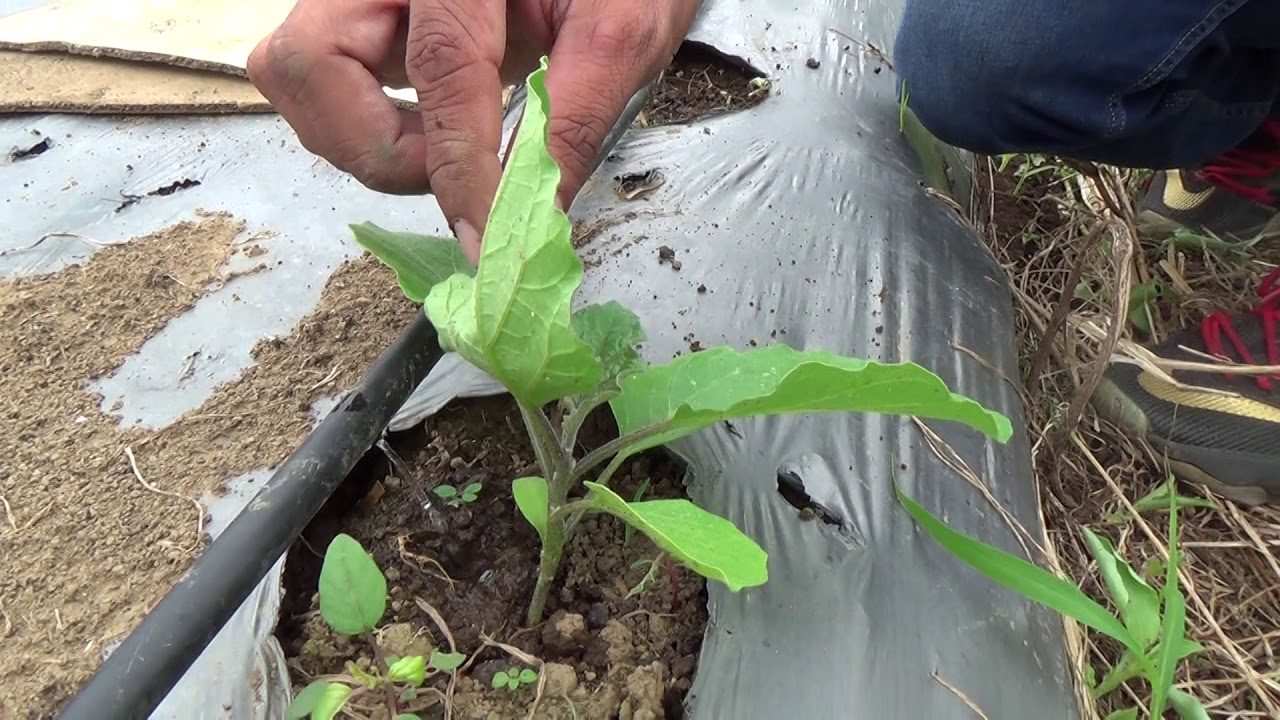
The application of EMAS will be mixed in the water and will be applied directly to the leaves and to the based of the plant. The application will be done at 3 days interval after transplanting.


CARE AND MANAGEMENT 

Image result for trellising of ampalaya
Trellising
Bitter gourd or ampalaya grows best with overhead (balag type) trellis about 6 ft high. A lining of bamboo poles with abaca twine as lateral supports is done three weeks after germination. Lateral support of bamboo poles are spaced three meters between furrows and two meters between hills and the side support is place after the bamboo poles are constructed. The horizontal support of abaca twine is place before the vine reaches the top with a 6-inch mesh.

Related image
Water and Weeding Management
Ampalaya is a plant that requires an abundant supply of moisture for vegetative and reproductive development to maintain a good crop stand in the dry season. Furrow irrigation is done twice a week during vegetative stage and once a week during the reproductive stage or before each application of fertilizer. Weeding is done when need arises.
Pests and Diseases Control
Powdery Mildew- It is cause by a fungus that appears as white powdery growth on leaves. Crown leaves are affected first and may wither and die. The fungus may be introduced on greenhouse grown plants or wind from areas infected with the diseases. Disease development is favor by high temperature.
Downy Mildew-A irregular shaped yellowish to brown spots appears on upper side of the leaves, usually at the center of plants. Under moist condition, a purplish mildew develops on the underside of the leaf spots. Leaves die as spots increase it size. Spread is rapid from the crown toward new growth. Moist condition favors the development of the disease.
Bacterial Wilt -The disease is characterized initially by wilting and drying of individual leaves, which also exhibit cucumber beetle injury. Later, leaves on one or more laterals or entire plants wilts. Wilted parts may appear to recover at night, but they wilt on successive sunny days and finally die.
Several kinds of leaf diseases attack the plant and can cause yield reduction. Most often, the old leaves are affected; spraying of Fungicide is a preventive measure. You can consult your local inputs dealer on how and what fungicide to use. However crop rotation, field sanitation, and the use of resistant varieties is also highly recommended.
Fruitfly- The fruitfly is one of the major insect pests of ampalaya. Adults lay it eggs on the young fruits. The eggs later hatch into small worms that starts feeding inside the fruits. Symptoms are deformed fruits, fruits with holes that turn orange or yellow prematurely. The insect can be control by removing all damage fruits from the field. Spray only after the removal of the damage fruits with insecticides recommended by your pesticide dealer. Wrapping young fruits with newspaper or plastic bags prevent the fruit fly from laying eggs on the fruits. Wrapping reduce the use of pesticides.
Thrips- it is a very small crawling insect on that stays on the lower side of the leaves. It is recommended to spray during nighttime 2 t0 3 consecutive nights if infestation is severed. This was found to be very effective time to spray. The pest hides during daytime and cannot be control using contact insecticides. Neighboring plantation should also be sprayed at the same time. Consult your input dealer on what pesticides to use in controlling this pest.

Related image
Harvesting
Harvest when the fruits are green. Harvesting starts 45 to 50 days after seedling. It can be done twice a week. Harvest early in the morning to protect harvested fruits against rain, sun, and mechanical damage. Sort fruits according to marketable standards, and remove damage fruits. Pack in plastic or bamboo crates line with newspaper or bamboo leaves. Fruits can be stored for 2-3 days under this condition.

Tuesday, January 22, 2019

Related Articles About Ampalaya and EMAS

Botanical Description of Ampalaya
Ampalaya is a tropical plant largely found in Asia, South America, East Africa and the Caribbean. Often referred as bitter melon or bitter gourd, its fruits is used in both food preparation and alternative medicines. The juices seeds and oil extract of the unripened fruit are thought to hold medicinal qualities due to high concentration of vitamins, minerals and alkaloids. Supplementing the diet with fruit, juice or extract is said to prevent or treat a number of diseases, disorders and infection (Reverson, 2017 ).
Related image

Nutritional Benefits of Ampalaya

Ampalaya is one of the most famous wonder vegetable. It is widely known that can lower down blood sugar level, it is also anti- cancer, antioxidant, immuno booster, appetite supressor, good for the heart, skin improvement, effective in weight loss and can easy digestion these are the top ten benefits of Ampalaya. Bitter melon makes up a staple in Indian and Chinese cuisines, and high regarded tropical Asia for its medicinal properties. Like most  vegies Ampalaya is low in calories, each pood contains 21 calories or 1% of calorie intake in a 2000 calorie diet. Within the Ampalaya whitle flesh has several essential nutrients including vitamins that support the health, adding the Ampalaya the duet promotes healthy skin. Amapalaya pod and leaves are both rich in vitamin C, a nutrient needed to make the skin friming collagen (Joben, 2014).


Image result for photos 10 health benefits of Ampalaya

Climatic and Soil Requirements of Ampalaya

Ampalaya grows well under the same condition preferred with other cucurbits. It is normally grown as an annual crop but can perform as perennial in areas with mild, frost free  winters. The plant thrives in the tropics from lowland areas to altitude to up to 1000 meter. Ampalaya requires a minimum temperature of 18C during early growth but optimal temperature compared to other gourds. But cool temperature will retired growth and frost will kill the plant. The plant adopted to a wide variuety of rainfall condition but regular irrigation is needed to ensure high yield. Ampalaya tolerates a wide range of soil but prefer to a well drained sandy soil that is rich in organic matter. The optimum soil pH is 6.0 to 6.7, plant but plant tolerate alkaline soil up to pH 8.0 (MIxph, 2015).

Image result for photos of climatic and soil requirements of Ampalaya


Effective Microorganism

Effective microorganism (EM) are mix cultures of beneficial naturally occurring organism that can be applied as inoculants to increase the microbial diversity of soil eco-system. They consist mainlyof the photosynthesizing bacteria, lactic acid bacteria yeast, actinomycetes, and fermenting fungi. This microorganism are physiologically compatible with one another and coexist and liquid culture. There is evidence that EM inoculation to the soil can improve the quality of soil, plant growth and yield of the crops (Kengo, 2000).
EM is used to extend and multiply the present microbes in the concentrate and fermenting it further maximize its full potential. Basically using EMAS can multiply the microbes and the awakening them because in the concentrate, the microbes is in a sleeping form, now the EM will awaking them and multiply them through fermentation ( Abbas, 2013). 
Image result for photos of Effective microorganism

Production of Ampalaya Applied with Different Levels of Effective Microorganism Activated Solution (EMAS)

Introduction
Background of the Study


Bittergourd /Ampalaya Momordica charantia L.) is a tropical and sub-tropical species belonging to the family cucurbitaceae, and is widely grown for its edible fruits. It is annual to perennial monocious  climbing of sprawling herb, 2 to 3 meter tall (Maiti, 2012).
Bitter melon is a long, slender vine, with long stalk leaves and very bitter fruits, grown in tropical and subtropical areas of Asia, South America, Africa and the Carribbean. The fruit has been used as a food and medicine. Parts of the fruit have been used as an antibacterial agent,hypogclycemic agent, and to treat high lipid  levels.

Related image