Land Preparation
A good land preparation is very important in ampalaya culture. The field should be well prepared, plowed and harrowed twice to remove weeds and other plant debris in the field. Furrows are then made 3 meter apart. Organic fertilizer is applied at the rate of 5 tons per hectare during land preparation or a week before planting.

Plastic Mulch
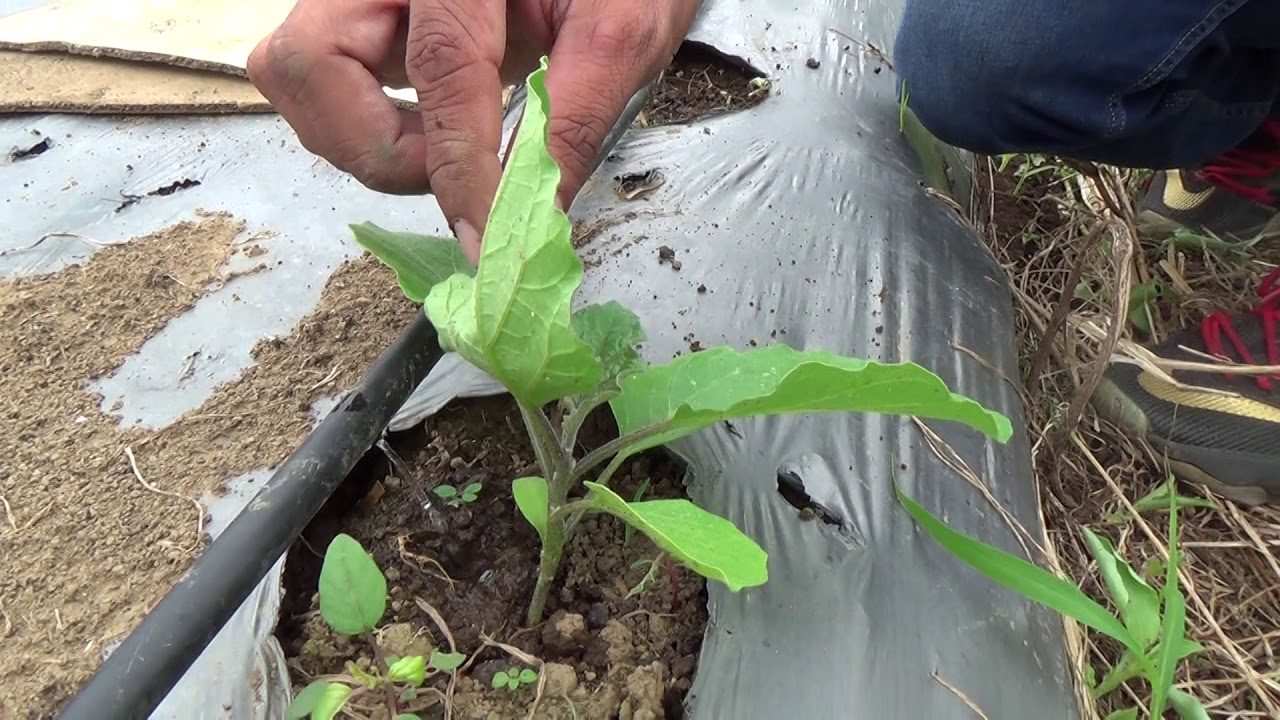
An improved technology in the Philippines for ampalaya production is the use of plastic mulch to cover the beds. Planting holes are bored into the plastic sheet base on the planting distance. It offers number of advantage, its control weeds, preserve soil moisture, prevent soil erosion and leaching of fertilizers and reflect light, serving as repellant to insect which hide under the leaves.
To use the plastic mulch, stretch it over the planting beds, with edges held down by thin bamboo slats, staple well into the soil every 20 cm. Punch holes at 50 cm between plants in the row and 3 meters between rows.
Steps of Mulching
Step 1: Prepare the Ground for Plastic Mulch.
Step 2: Lay Fertilizer Before Mulching.
Step 3: Dig Two Trenches.
Step 4: Roll Out Plastic Mulch.
Step 5: Use Mulch Spreader.
Step 6: Water Mulch.

Planting
Ampalaya can be direct seeded or transplanted. Direct seeding is most common, a hectare of production area requires 2.5 to 3.0 kilograms of seeds, Seeds are soak in water overnight or wrap in cheesecloth to facilitate water absorption. Seeds are planted the following day or as the radicle break. Transplanting can also be done specially when the seeds are scarce and during off-season planting. Seeds are planted in small plastic bags (1 seed/bag with soil mixture of 1:1 garden soil and sand/compost/carbonized rice hull) and transplanted to the field when the vine starts to grow. Pre- germinated seeds result in good seedling and an even crop establishment.

Application of EMAS
The application of EMAS will be mixed in the water and will be applied directly to the leaves and to the based of the plant. The application will be done at 3 days interval after transplanting.
CARE AND MANAGEMENT

Trellising
Bitter gourd or ampalaya grows best with overhead (balag type) trellis about 6 ft high. A lining of bamboo poles with abaca twine as lateral supports is done three weeks after germination. Lateral support of bamboo poles are spaced three meters between furrows and two meters between hills and the side support is place after the bamboo poles are constructed. The horizontal support of abaca twine is place before the vine reaches the top with a 6-inch mesh.
Water and Weeding Management
Ampalaya is a plant that requires an abundant supply of moisture for vegetative and reproductive development to maintain a good crop stand in the dry season. Furrow irrigation is done twice a week during vegetative stage and once a week during the reproductive stage or before each application of fertilizer. Weeding is done when need arises.
Pests and Diseases Control
Powdery Mildew- It is cause by a fungus that appears as white powdery growth on leaves. Crown leaves are affected first and may wither and die. The fungus may be introduced on greenhouse grown plants or wind from areas infected with the diseases. Disease development is favor by high temperature.
Downy Mildew-A irregular shaped yellowish to brown spots appears on upper side of the leaves, usually at the center of plants. Under moist condition, a purplish mildew develops on the underside of the leaf spots. Leaves die as spots increase it size. Spread is rapid from the crown toward new growth. Moist condition favors the development of the disease.
Bacterial Wilt -The disease is characterized initially by wilting and drying of individual leaves, which also exhibit cucumber beetle injury. Later, leaves on one or more laterals or entire plants wilts. Wilted parts may appear to recover at night, but they wilt on successive sunny days and finally die.
Several kinds of leaf diseases attack the plant and can cause yield reduction. Most often, the old leaves are affected; spraying of Fungicide is a preventive measure. You can consult your local inputs dealer on how and what fungicide to use. However crop rotation, field sanitation, and the use of resistant varieties is also highly recommended.
Fruitfly- The fruitfly is one of the major insect pests of ampalaya. Adults lay it eggs on the young fruits. The eggs later hatch into small worms that starts feeding inside the fruits. Symptoms are deformed fruits, fruits with holes that turn orange or yellow prematurely. The insect can be control by removing all damage fruits from the field. Spray only after the removal of the damage fruits with insecticides recommended by your pesticide dealer. Wrapping young fruits with newspaper or plastic bags prevent the fruit fly from laying eggs on the fruits. Wrapping reduce the use of pesticides.
Thrips- it is a very small crawling insect on that stays on the lower side of the leaves. It is recommended to spray during nighttime 2 t0 3 consecutive nights if infestation is severed. This was found to be very effective time to spray. The pest hides during daytime and cannot be control using contact insecticides. Neighboring plantation should also be sprayed at the same time. Consult your input dealer on what pesticides to use in controlling this pest.

Harvesting
Harvest when the fruits are green. Harvesting starts 45 to 50 days after seedling. It can be done twice a week. Harvest early in the morning to protect harvested fruits against rain, sun, and mechanical damage. Sort fruits according to marketable standards, and remove damage fruits. Pack in plastic or bamboo crates line with newspaper or bamboo leaves. Fruits can be stored for 2-3 days under this condition.

Good day! I'm a beginner Ampalaya planter, and I need more knowledge ,more informations,more advices from you ,as expert on this field, Ampalaya Production. Can I have your best advice, practices on this matter? I will treasure your advices, and I will be very glad for your response on this humble request. More Power and Godbless!
ReplyDelete